Ultimate Guide to “Canned Air” / Aerosol Dusters
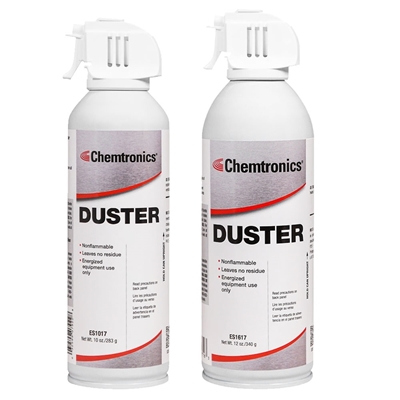
Aerosol duster, commonly referred to as “canned air,” “compressed air,” or “dusting gas,” is used to dislodge dust and dirt with a pressurized blast. While compressed air lines are often used on production lines, they are inflexible and less suited for small product assembly, repair centers, or field repair. That’s where aerosol dusters excel.
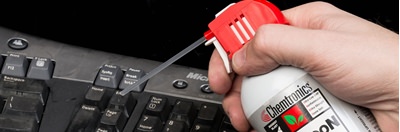
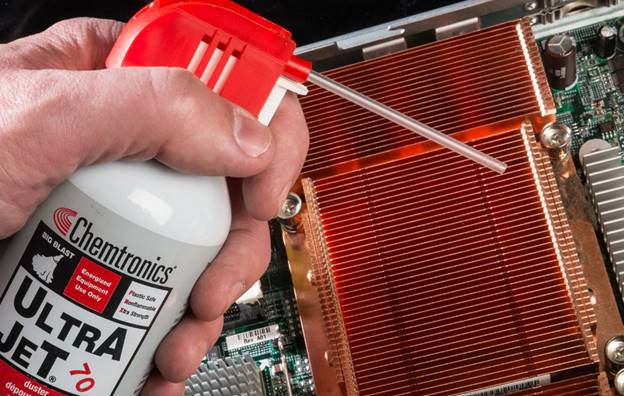
These dusters blast dirt from keyboards, computer vents, and tight stencil apertures in PCB assembly. Below is everything you need to know about selecting and using canned air.
What is Inside Aerosol Duster?
Despite nicknames like “canned air,” aerosol dusters contain refrigerants or propellants—not breathable air. Proper ventilation is always required when using them.
| Propellant Type | Description & Safety | Environmental Impact |
|---|---|---|
| HFC-134a | Nonflammable and popular for industrial applications, especially near energized circuits or high-voltage devices. | High Global Warming Potential (GWP) of 1400 (1400 times the impact of CO2), but it is VOC-free. |
| HFC-152a | Common in retail stores due to lower cost. Concentrated HFC-152a is flammable and can ignite if exposed to sparks or flames, especially in enclosed areas or if dispensing liquid. | GWP of 130 (1/10th of HFC-134a) and is VOC-free. |
| HFO-1234ze | Newer technology that is nonflammable and safe for live circuits. It is currently more expensive but prices should decrease with widespread adoption. | Ultra-low GWP of less than 1 and VOC-free. |
| CO2 (Carbon Dioxide) | Comes in small, replaceable metal cartridges. Nonflammable, but spray force is lower than liquid propellants and diminishes as the cartridge empties. | Low GWP and VOC-free. |
| DME (Dimethyl Ether) | Less common and illegal in many areas due to safety concerns. | Extremely flammable and is a smog-contributing VOC. |
Commercial vs. Retail Dusters
While buying low-cost retail duster is tempting, commercial dusters offer distinct advantages for worker safety and product reliability.
- Flammability: Retail dusters generally use cost-effective HFC-152a, which is flammable. Industrial markets prefer nonflammable HFC-134a for OSHA compliance and safety around live circuits.
- Purity: Commercial dusters are highly filtered to minimize moisture and contamination, which is critical for sensitive electronics. Retail dusters lack these strict controls.
- Bitterant Additives: Retail dusters often add bitterant to prevent intentional inhalation (“huffing”) by making the product taste bad. In industrial environments, this bitterant acts as an unwanted contaminant on sensitive surfaces like circuit boards.
- Fill Weight: Retail cans may look identical in size but contain different amounts of propellant (e.g., 3.5 oz., 8 oz., 10 oz.). Always divide the price by the fill weight to compare costs accurately.
Specialty Formulations & Delivery Systems
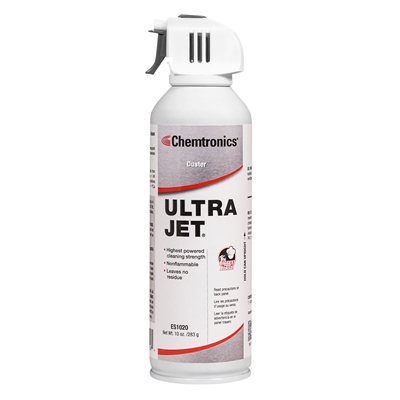
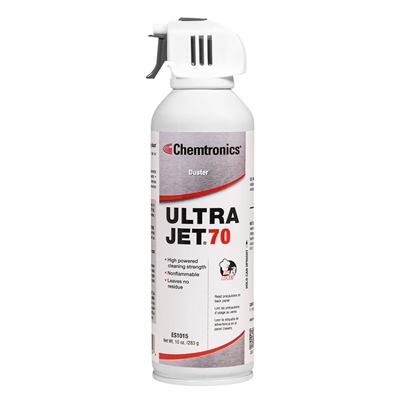
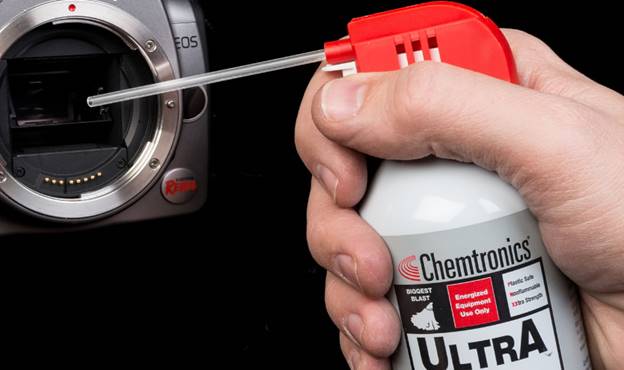
High-Velocity Cleaning Propellants generate different force levels: HFC-134a has the highest potential, followed by HFC-152a (10% less), and HFO-1234ze (33% less). For extra power, Ultrajet Duster generates about 60% more force than standard HFC-134a dusters, and Ultrajet 70 Duster generates over 40% more force for aggressive cleaning.
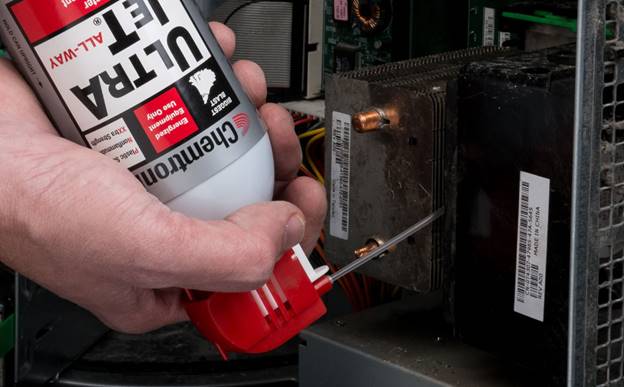
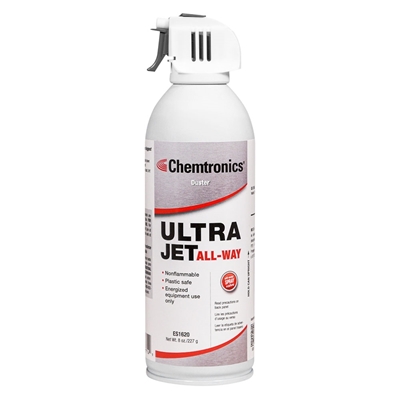
Upside-Down Spraying Standard dusters can be sprayed right-side-up or at a 45 angle; otherwise, they spray liquid refrigerant as cold as -60°F / -51.5°C, which can damage components. Ultrajet All-Way Duster is specifically designed to spray only gas regardless of how the can is rotated.
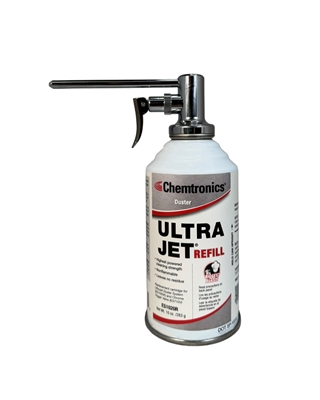
Static Prevention & Grounding Standard plastic trigger sprayers can build a static charge. The Ultrajet Duster System solves this by using a reusable chrome trigger sprayer that is conductive. If the user is grounded by a wrist strap, the sprayer is also grounded, preventing static buildup.
Frequently Asked Questions (FAQs)
Q: What’s the correct technique for spraying aerosol duster?
A: To achieve the optimum force, spray short three-to five-second blasts at room temperature. Continually spraying acts as a heat sink, cooling the can and lowering internal pressure, which greatly decreases the generated force.
Q: Do aerosol dusters hurt the ozone layer?
A: No, this is a misconception based on old information. Dusters contained CFCs over 20 years ago but have been replaced. In North America, no commercially available aerosol dusters contain ozone-depleting propellants.
Q: Are nonflammable aerosols available?
A: Yes, HFC-134a and HFO-1234ze are two commercially available aerosol dusters that are nonflammable. They are ideal for professional or industrial applications, especially when spraying high voltage electrical devices or energized circuits.
Q: Is there an aerosol duster that is safer for the environment?
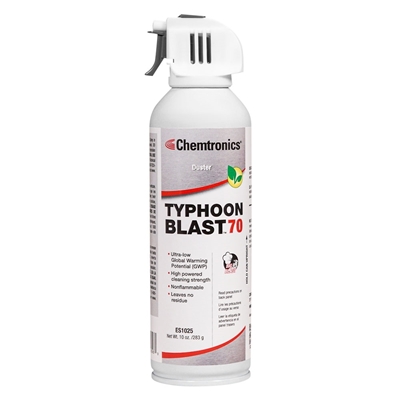
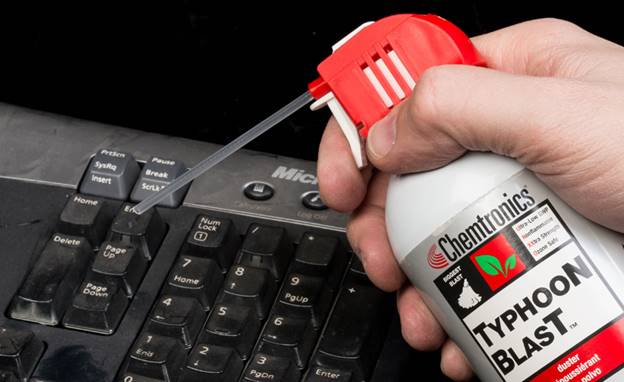
A: Yes, Typhoon Blast 70 Duster contains HFO-1234ze, which is nonflammable and has an ultra-low GWP of less than 1, meaning its global warming impact is lower than CO2.
Ask A Technical Question
Stay up-to-date on Chemtronics news, products, videos & more.
Related Products