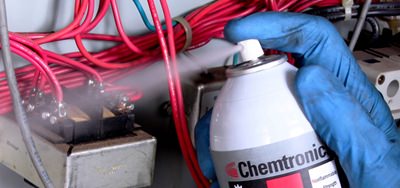
Ultimate Guide to Degreasers & Precision Cleaners
What Is a Degreaser?
A degreaser (also called a precision cleaner or maintenance cleaner, and in automotive use, a carb or brake cleaner) is a solvent- or water-based cleaner designed to remove common industrial contamination, such as:
- Grease and oils
- Cutting fluids
- Corrosion inhibitors
- Fingerprints and handling soils
- General dirt and contamination
The goal is to remove contamination quickly while avoiding as much wiping and scrubbing as possible. Degreasing solvents usually come in pressurized aerosol packaging for convenience and to provide a forceful spray that creates agitation and reaches into all the crevices.
Water-based degreasers are typically used in trigger sprayers or bulk containers for immersion or batch cleaning. For more automated processes, ultrasonic or vapor degreasing systems can be used, especially in critical applications such as aerospace and medical electronics.
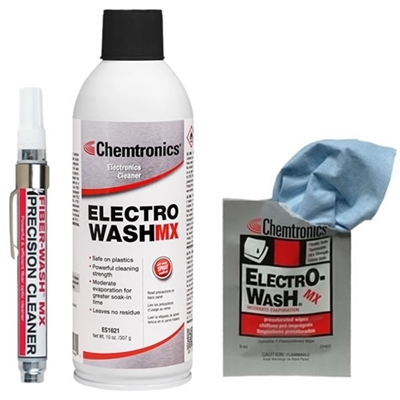
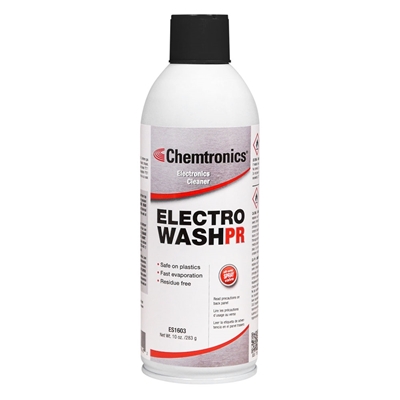
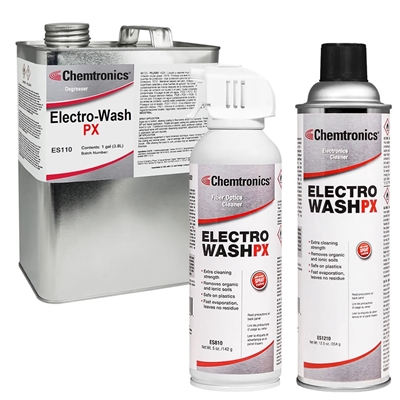
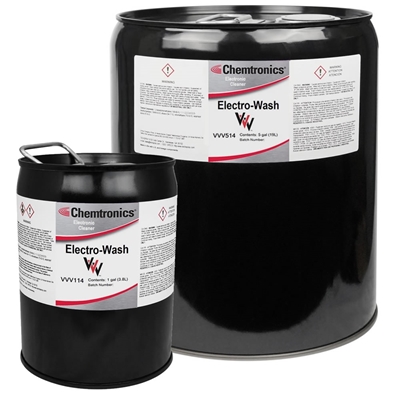
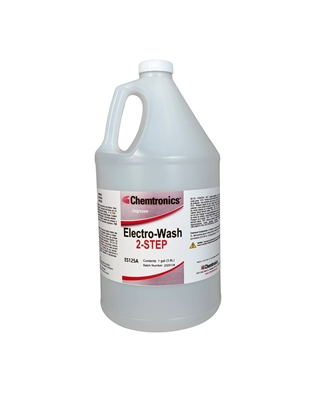
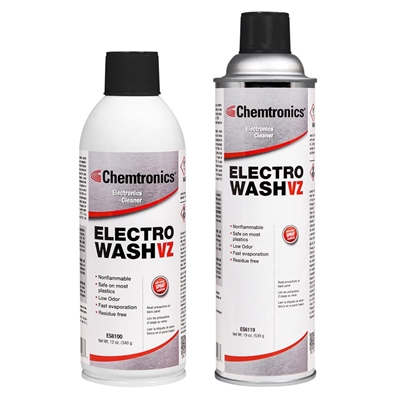
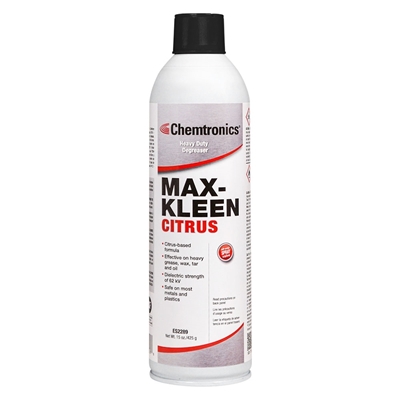
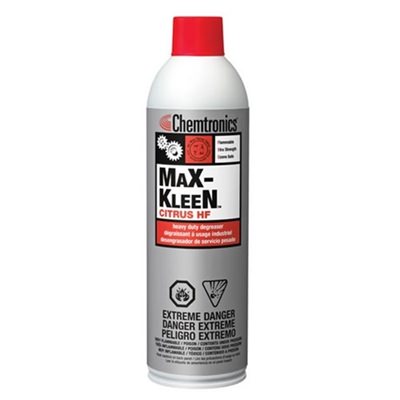
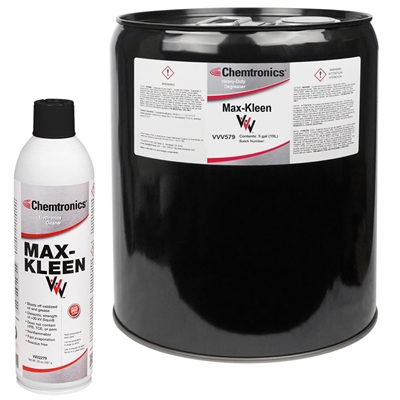
Chemtronics offers a large selection of degreasers and precision cleaners under the Electro-Wash® and Max-Kleen™ brands, which range from economical heavy-industry cleaners to high precision solvents for sensitive components.
Why Use a Degreaser?
Degreasers remove contamination that can cause corrosion, overheating, electrical resistance, slipping hazards, equipment failure, and more.
Cleaner Degreasers are engineered to clean a wide variety of soil, oil, grease, oxides and handling contamination, from equipment and assemblies that include:
- Metal and fiber optic cable splices
- Motors and transformers
- Programmable Logic Controllers (PLCs)
- Pneumatic and hydraulic assemblies
- Electronics and electrical equipment
- Meters/measurement devices
Industrial-strength degreasers are designed for tougher jobs requiring removal of grease, tar, asphalt, oil, and grime, including:
- Clutches, armatures, generators, and compressors
- Electrical motors and equipment
- Bearings, chains, cables, pulleys and gear drives
- Brakes, springs, and flywheels
Degreaser vs Contact Cleaner
A degreaser removes grease, oil, oxides, and handling contamination from equipment and assemblies. A contact cleaner (also called electrical cleaner, switch cleaner, electrical contact cleaner, or battery terminal cleaner in automotive use) is a solvent designed to remove contamination from electrical contacts, including connectors, switches, and other conductive components with moving surface contacts.
| Product Type | Primary Use | Best For |
|---|---|---|
| Degreaser | Removes grease, oil, grime, oxides, and soils | General equipment, parts, and assemblies |
| Contact Cleaner | Removes contamination from conductive contact surfaces | Connectors, switches, relays, electrical contacts |
How to Choose a Degreaser
When selecting a degreaser, there are multiple options and trade-offs to consider. While price is a factor, performance, safety, and compatibility can have a significant impact on results.
Flammability
Many commercially available degreasers contain alcohols and hydrocarbon solvents, which are highly flammable. While economical and effective, they can pose safety risks in the presence of sparks, open flames, or hot surfaces.
Nonflammable degreasers are available to reduce these risks, though they may come at a higher cost and may include chemicals such as Perchloroethylene (Perc), Trichloroethylene (TCE), or N-propyl Bromide (nPB), which have toxicity concerns.
High flashpoint solvents are still flammable but are less likely to ignite under normal ambient temperatures (below 140°F/60°C).
Dielectric Strength
If cleaning energized equipment, choose a degreaser with high dielectric strength.
Dielectric strength is the maximum electric field a material can withstand before breaking down and allowing current to flow. Lower dielectric strength increases the risk of short circuits and safety hazards.
Always evaluate voltage and amperage before cleaning electrical systems.
Plastic / Rubber Compatibility
While not a concern for metal cleaning, some solvents can damage plastic packaging and rubber components by causing cracking, embrittlement, swelling, or dissolution.
A new degreaser should always be tested before being used extensively on your new (and expensive) equipment.
Toxicity
N-Propyl Bromide (nPB), Trichloroethylene (TCE), and Perchloroethylene (Perc) are toxic chemicals commonly used in degreasers to provide cleaning performance in nonflammable formulas. Exposure to high levels has been linked to serious health effects, including headaches, dizziness, loss of full body control, and potential reproductive issues and cancer.
These risks have prompted many facilities to reconsider solvent choices, especially in manual cleaning processes where exposure tends to be higher than in more automated cleaning processes.
Environmental Issues
While ozone depletion was once a concern with solvents such as chlorofluorocarbons (CFCs) like Freon and hydrochlorofluorocarbons (HCFCs) like AK-225, these are no longer available on the commercial market in North America. Current concerns include:
- Volatile organic compounds (VOCs), which contribute to smog
- Solvents with high global warming potential (GWP)
- Regulatory restrictions from state (e.g., CARB, the California Air Review Board), municipal, and industry-specific agencies
Degreasing Methods
Degreasing can be performed manually or through automated systems depending on application, volume, and required precision.
Manual Degreasing Methods
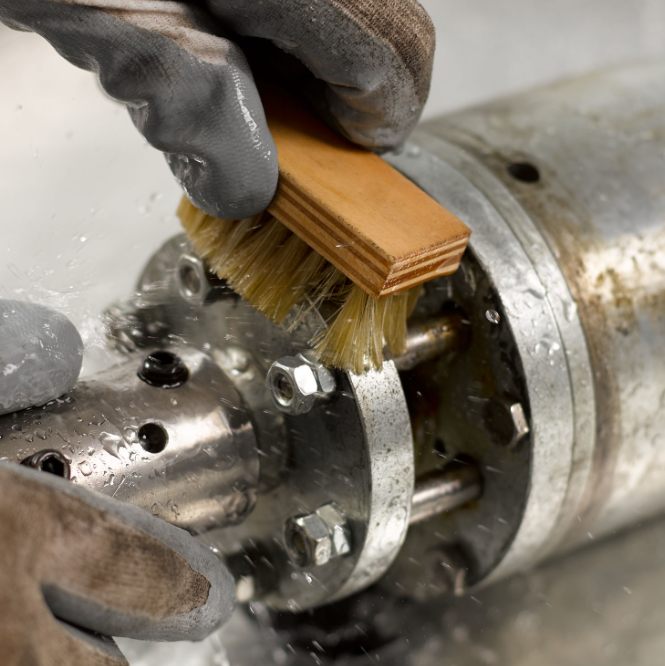
Manual cleaning is typically performed at a benchtop, workstation, or in the field. These methods are more labor-intensive and less repeatable, so results may vary between operators.
- Aerosol: Sealed system that ensures fresh solvent with each use; spray pressure provides agitation and access to tight areas. A straw attachment is often included for precision.
- Trigger spray: Common for water-based cleaners and isopropyl alcohol (IPA); less typical for aggressive solvent cleaners.
- Liquid immersion: Parts can be immersed in a tray or bucket of solvent cleaner, often with swabs or brushes for stubborn soils; heating can improve performance but should only be used with nonflammable degreasers.
- Presaturated wipes and swabs: For added convenience, wipes and swabs are available presaturated with a mild solvent like isopropyl alcohol.
Automated or Semi-Automated Degreasing Methods
For higher-volume cleaning, such as in manufacturing, stamping, or forming operations, or when reduced variability is required in critical applications like aerospace and medical electronics, automated cleaning methods are used.
- Ultrasonic: Uses sound waves to create implosions that break apart and lift contamination from surfaces. Heating can improve performance (nonflammable only). Solvent should be changed regularly to avoid cross-contamination, and the process may be too aggressive for sensitive components.
- Vapor degreaser: High-precision cleaning process where parts are cleaned in boiling solvent, rinsed in a secondary sump (often with ultrasonics), and rinsed in solvent vapors. Requires specialized solvents (azeotropes or near-azeotropes) to maintain consistent properties during continuous cycling.
- Batch washer: Similar to a dishwasher or car wash for parts; components are either stationary or conveyed while a (typically water-based and highly caustic) cleaning solution is sprayed over them.
Should a Degreaser Be Nonflammable?
A nonflammable degreaser is the safest option when vapors or liquids may be exposed to sparks, open flames, hot surfaces, or energized equipment. While not always required, it is strongly recommended in these conditions due to increased fire risk.
Many commercially available degreasers contain alcohols and hydrocarbon solvents, which are highly flammable. While economical and effective, they can pose safety hazards without proper ventilation or when used near ignition sources such as welding processes or hot surfaces. Nonflammable cleaners are available to reduce these risks.
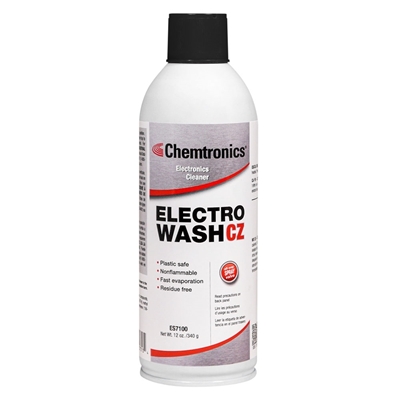
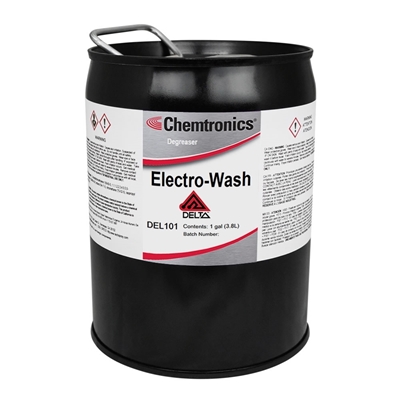
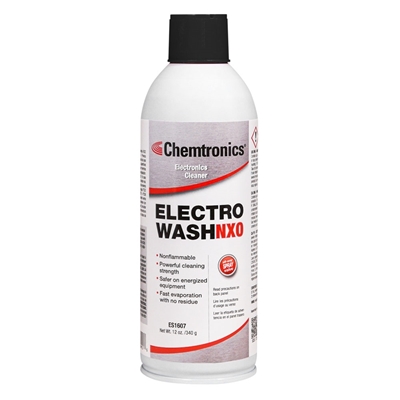
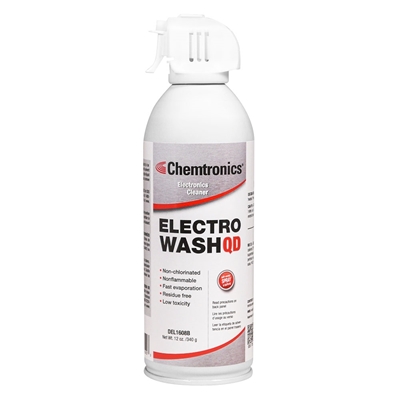
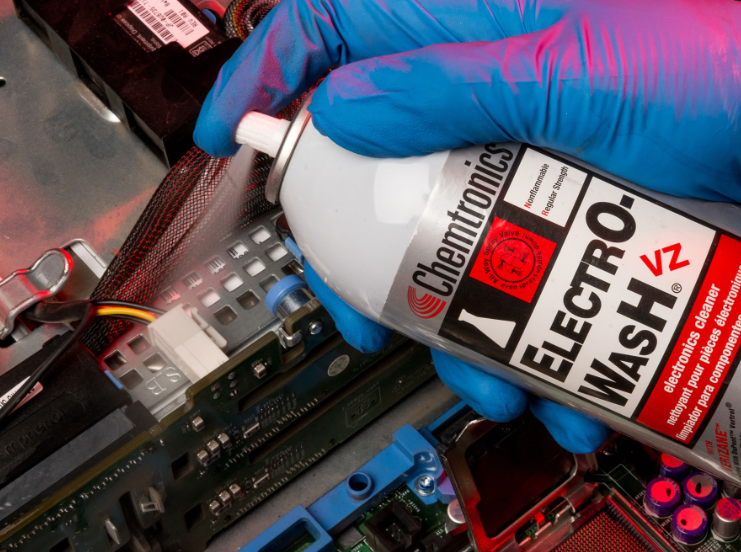
Nonflammable degreasers are readily available, although they are generally more expensive than flammable degreasers. Chemtronics has several nonflammable degreasers available, including Electro-Wash® VZ, Electro-Wash CZ, Electro-Wash Delta, Electro-Wash QD, Electro-Wash NXO, and Electro-Wash Two Step.
How to Identify Flammability
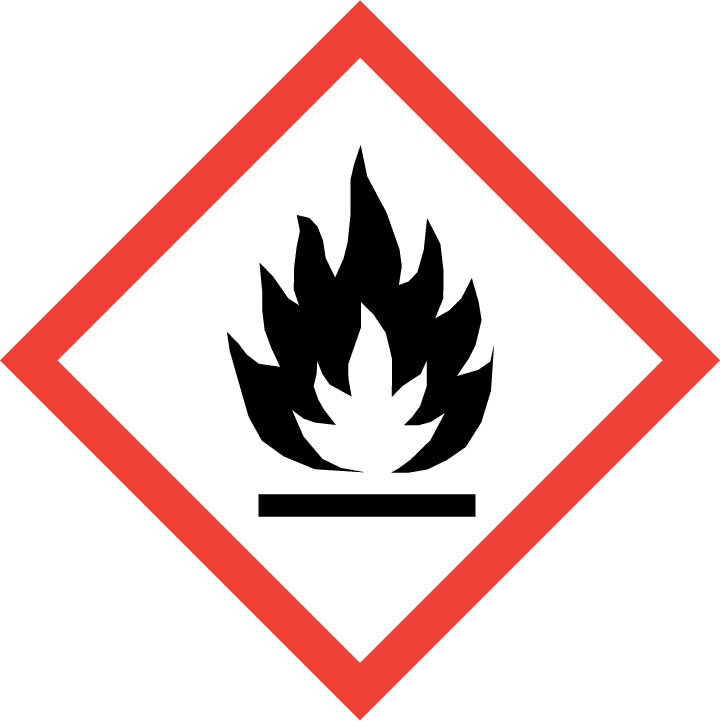
- GHS pictogram: The most common method is the Global Harmonized System (GHS) flammable symbol ( see diamond symbol above). Unless a degreaser passes a stringent test, it must carry this label.
- Aerosol test method: For an aerosol cleaner, the test involves spraying the solvent cleaner into a drum with a candle for 5 minutes. If it doesn’t ignite within that time period, the cleaner is considered nonflammable.
- NFPA and HMIS ratings: The National Fire Protection Association (NFPA) and Hazardous Materials Identification System (HMIS) rate flammability from 0 to 4, with 0 indicating nonflammable.
What Does “High Flash” or “Flash Point” Mean?
Flash point is the temperature at which a solvent’s vapors ignite, and “high flash” degreasers have vapors that are less likely to ignite at normal ambient temperatures (typically below 140°F/60°C), though they still support combustion.
Flash point is measured by heating a solvent from room temperature to its boiling point while attempting to ignite the vapors with either a sparker or ignition source. If the vapors ignite, the temperature at that moment is recorded as the flash point.
High flash point degreasers are often chosen because they offer a balance of lower cost and improved safety in normal operating conditions compared to highly flammable solvents.
However, many high flash cleaners contain terpene-based or citrus-based (d-limonene) solvents, which have extremely slow evaporation. While alcohol-based solvents may evaporate in minutes, high flash solvents can take hours to fully evaporate.
Is It Safe to Clean Electrical Equipment While the Power Is On?
No, it is not recommended to clean electrical equipment while the power is on due to the risk of sparks, electrical shorts, discharges, and other safety hazards.
If, for whatever reason, you don’t have the option of disconnecting the power, look for degreasers with a dielectric strength above 30 kV (30,000 volts). Choosing a nonflammable cleaner would also add an extra layer of safety in case there is a spark.
What Is Dielectric Strength?
Dielectric strength is defined as the maximum electric field that the material can withstand under ideal conditions without breaking down.
Breakdown means the material loses its insulating properties, allowing electricity to escape the conductors and burn a path through the weakest point
This is not a gradual process. Once the electrical threshold is reached, discharge happens immediately (or in a nanosecond). Even if full discharge does not occur, the material can still be severely degraded and lose its insulating effectiveness.
Why It Matters for Degreasing
- A cleaner should clean without conducting electricity
- It must act as an insulator to protect both the user and the equipment
- It should not allow electricity to travel back to the user or damage the circuit
Certain contaminants, such as carbon, are conductive, so both the soil and the cleaning solution must be considered together
What to Look For
- Choose a degreaser with high dielectric strength
- The higher the value, the better the insulating performance
- Avoid using cleaners below 30 kV (30,000 volts) on energized equipment
Should I Worry About Plastics and Rubber When Degreasing?
Yes, plastics and rubber components can be damaged by incompatible degreasers, so compatibility should always be considered.
While contact surfaces are typically metal, they are often housed in plastic and sealed with rubber gaskets. If a solvent is incompatible:
- Plastics may craze (small cracks), embrittle, or soften
- Rubber seals may swell, shrink, or dissolve
Plastic Compatibility
Rigid plastics such as ABS, polycarbonate (Lexan), and acrylic (Plexiglass) can be very sensitive to harsh solvents like toluene, xylene, and acetone. Alcohol- and hydrocarbon-based solvents tend to be more compatible with sensitive plastics.
Rubber and Seal Compatibility
Rubber, silicone, and other elastomeric materials can swell or shrink when exposed to harsh solvents. After the solvent flashes off, they may:
- Return to original dimensions
- Or be permanently changed, affecting seal performance
Polyester and Teflon-based gasketing materials are less prone to damage from harsh solvents.
Best Practice
- Always test a new degreaser before use, especially on sensitive or expensive equipment
- For sensitive materials, Chemtronics offers Electro-Wash® CZ for the best material compatibility
Are Some Degreasers More Toxic Than Others?
Yes, some degreasers contain toxic solvents that can cause serious health effects, especially with prolonged or high-level exposure.
Common examples include N-Propyl Bromide (nPB), Trichloroethylene (TCE), and Perchloroethylene (Perc), which are often used to provide cleaning performance in nonflammable formulas.
Regulatory and Health Considerations
- nPB (N-Propyl Bromide):
- CA OSHSB PEL: 5 ppm; listed under Prop 65 as a developmental/reproductive toxicant
- Pennsylvania: listed as a hazardous substance
- ACGIH TLV: 10 ppm, with a proposed reduction to 0.1 ppm
- Classified by NTP as “reasonably anticipated to be a human carcinogen”
- Ontario, Canada adopted ACGIH recommendations (effective January 1, 2018)
- Comparable in toxicity to TCE, PCE, and methylene chloride (MeCl)
(Source: NTP, “Report on Carcinogens, Thirteenth Edition: 1-Bromopropane”, http://ntp.niehs.nih.gov/ntp/roc/content/profiles/bromopropane.pdf.)
Effective January 1, 2018, Ontario, Canada has implemented the ACGIH recommendations for nPB.
Exposure Risks in Practice
These risks have led many facilities to reconsider solvent choices, particularly in manual cleaning where exposure is higher. Contact cleaning is highly hands-on, making exposure control more difficult. In many cases, the most effective approach is to avoid highly toxic solvents, even if they are legal and readily available.
How to Identify Toxicity Risks
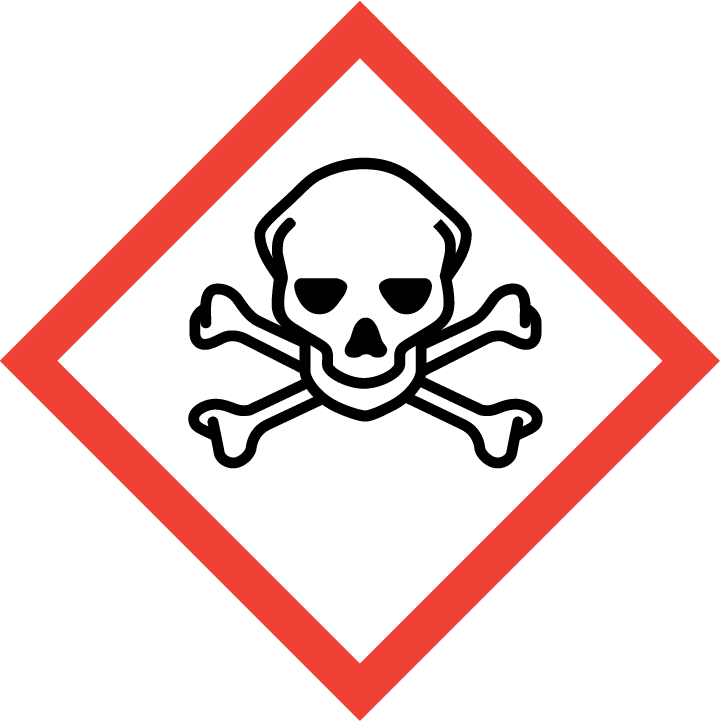
The fastest way to identify potential hazards is through GHS (Global Harmonized System) pictograms:
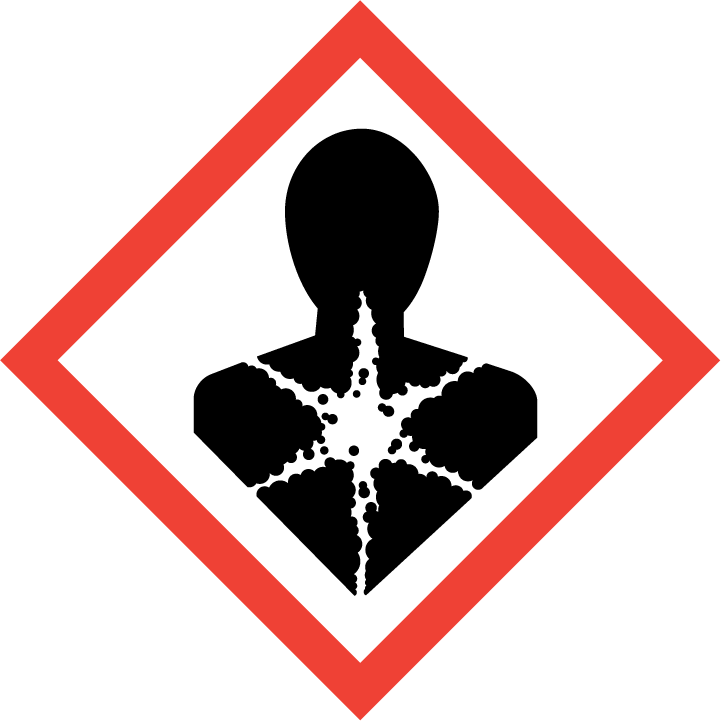
- Chronic toxicity (health hazard symbol seen above): Indicates potential long-term effects; review the SDS carefully and evaluate exposure controls
- Acute toxicity (skull and crossbones seen above): Indicates potential short-term health impacts; additional precautions may be required
If these symbols are present, review the Safety Data Sheet (SDS) and determine whether safe use is practical for your application.
Chemtronics Position
No Chemtronics contact cleaner contains toxic solvents such as nPB, TCE, or Perc.
While standard safety practices still apply, including reviewing labels, SDS, and using appropriate PPE, these products do not require the same level of exposure control as cleaners containing highly toxic solvents.
Are There Environmental Concerns with Degreasers?
Yes, but environmental requirements today are primarily driven by VOC regulations and how they are defined across different agencies.
VOC limits and definitions vary depending on the regulatory body. A cleaner may be considered low-VOC under EPA standards, but still be classified as high-VOC under stricter regulations such as CARB (California Air Resources Board).
Regulatory Considerations
- VOC limits differ by state, municipal, and industry-specific regulations
- CARB and similar agencies often enforce stricter standards than federal guidelines
- Compliance depends on how VOC content is defined and measured
Low-VOC Options
If low-VOC performance is required, Chemtronics offers several options, including:
Chemtronics Degreasers and Precision Cleaners
Chemtronics’ complete line of high purity solvents are the finest and most effective products made for the critical cleaning and degreasing of electronics, electrical assemblies, and sensitive components. Each degreaser and cleaning agent is formulated for specific applications, from precision cleaning of solvent-sensitive components to heavy-duty degreasing of electrical and electronic equipment.
Several products are compatible with benchtop ultrasonic, immersion, and vapor degreasing systems.
Electro-Wash® Cleaner Degreasers
Engineered to remove soil, oil, grease, oxides, and handling contamination from equipment and assemblies that include:
- Metal and fiber optic cable splices
- Motors and transformers
- Programmable Logic Controllers (PLCs)
- Pneumatic and hydraulic assemblies
- Electronics and electrical equipment
- Meters and measurement devices
Max-Kleen™ Heavy-Duty Degreasers
Designed with extra-strength formulas for tougher applications, providing fast, easy removal of grease, tar, asphalt, oil, and grime demanded by your toughest jobs, including:
- Clutches, armatures, generators, and compressors
- Electrical motors and equipment
- Bearings, chains, cables, pulleys, and gear drives
- Brakes, springs, and flywheels
Our technical assistance staff will be happy to discuss theSE products with you and answer any of your concerns or technical questions. Check out the Chemtronics degreaser and precision cleaner selection guide.
For samples or technical help, email [email protected] or call 770-424-4888.
Ask A Technical Question
Stay up-to-date on Chemtronics news, products, videos & more.
Related Products